
3 min read
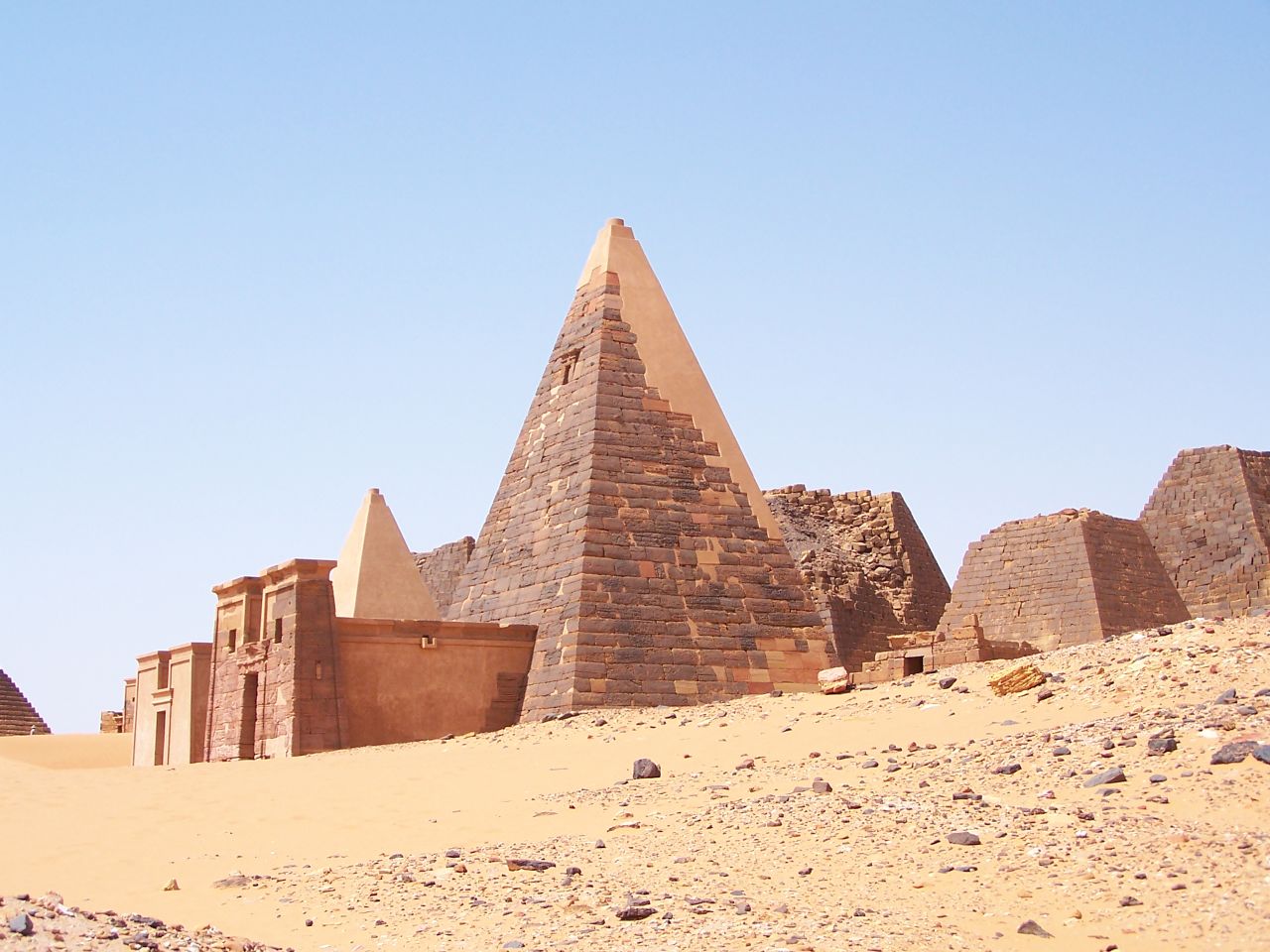
Sudan, once home to the ancient Kingdom of Kush, has at least 230 surviving ancient pyramids, far more than the roughly 120 to 140 found in neighbouring Egypt.
Ask most people where to find pyramids and they will say Egypt. Yet the country with the most ancient pyramids is its southern neighbour, Sudan. The rulers of the Kingdom of Kush built them along the Nile over hundreds of years, and well over 200 still stand.
Counting the pyramids
Guinness World Records lists Sudan as having at least 230 surviving ancient pyramids, with some estimates as high as 255. Egypt, by comparison, has roughly 120 to 140. National Geographic has described Sudan’s total as more than twice the number Egypt built. Exact figures vary because many structures are ruined, and archaeologists differ over what counts as a pyramid rather than a collapsed tomb.
The Sudanese pyramids are much smaller than the giants at Giza. At Meroe they range from about 30 to 100 feet tall, and they are narrower than their Egyptian cousins. They also work differently. In Egypt the burial chamber was often built inside the pyramid, but in Kush the royal dead were laid in chambers cut into the ground below, with the pyramid acting as a grand headstone above.
The kingdom that ruled Egypt
Kush, in the region known as Nubia, lasted from roughly the 8th century BC to the 4th century AD. It traded with Egypt and borrowed many of its customs, including pyramid building, which appeared in Nubia around the 7th century BC, nearly 2,000 years after the Giza pyramids. For a time, Kush did more than copy its neighbour. Its kings conquered Egypt and ruled it as the 25th Dynasty, from about 744 to 656 BC by one common dating. These rulers are sometimes called the Black Pharaohs.
The best known of them is Taharqa, who governed both lands. After their rule over Egypt ended, the Kushites kept their own kingdom going for centuries, first from Napata and later from Meroe.
Three great cemeteries
El-Kurru holds the earliest Kushite royal pyramids and the tomb of King Tanutamun (also spelled Tantamani), who died around 653 BC. His pyramid no longer stands, but his underground tomb can still be visited. Nuri, the royal cemetery for Napata, once had more than 70 pyramids, built between about 650 and 300 BC, and around 20 remain in good condition. Taharqa’s pyramid there is the oldest and largest. Rising groundwater has flooded some burial chambers, so archaeologists have used scuba gear to explore the tomb of King Nastasen.
Meroe is the largest site of all, with pyramids spread across several cemeteries. Its north cemetery alone holds 41 royal tombs, most of them for kings and queens who reigned between about 250 BC and AD 320. Many of the pyramids have flat or broken tops, partly because the Italian treasure hunter Giuseppe Ferlini destroyed dozens of them in the 1830s while searching for gold.
A heritage still being uncovered
In 2011 UNESCO added the Archaeological Sites of the Island of Meroe to its World Heritage List. The protected area lies in a semi-desert landscape between the Nile and Atbara rivers that formed the heartland of Kush. The sites receive far fewer visitors than Egypt’s monuments, and archaeologists say much of the region’s history is still waiting to be studied. For anyone who thinks of pyramids as a purely Egyptian idea, Sudan offers a reminder that ancient Africa had more than one great pyramid-building civilisation.
Key points
- Guinness World Records lists Sudan as the country with the most ancient pyramids, with at least 230 surviving compared with roughly 120 to 140 in Egypt.
- The pyramids were built by the Kingdom of Kush, whose kings also ruled Egypt as its 25th Dynasty in the 8th and 7th centuries BC.
- Kushite pyramids are smaller and steeper than Egypt's, with the burial chamber beneath the structure rather than inside it.
- The Archaeological Sites of the Island of Meroe were added to the UNESCO World Heritage List in 2011.
Sources
- Most ancient pyramids (country), Guinness World Records
- Sudan's ancient pyramids and the Kingdom of Kush, National Geographic
- Archaeological Sites of the Island of Meroe, UNESCO World Heritage Centre
Image: Fabrizio Demartis, CC BY-SA 2.0, via Wikimedia Commons