
3 min read
Peru is home to more than 3,000 potato varieties, and the crop was first domesticated about 8,000 years ago near Lake Titicaca on the border of Peru and Bolivia.
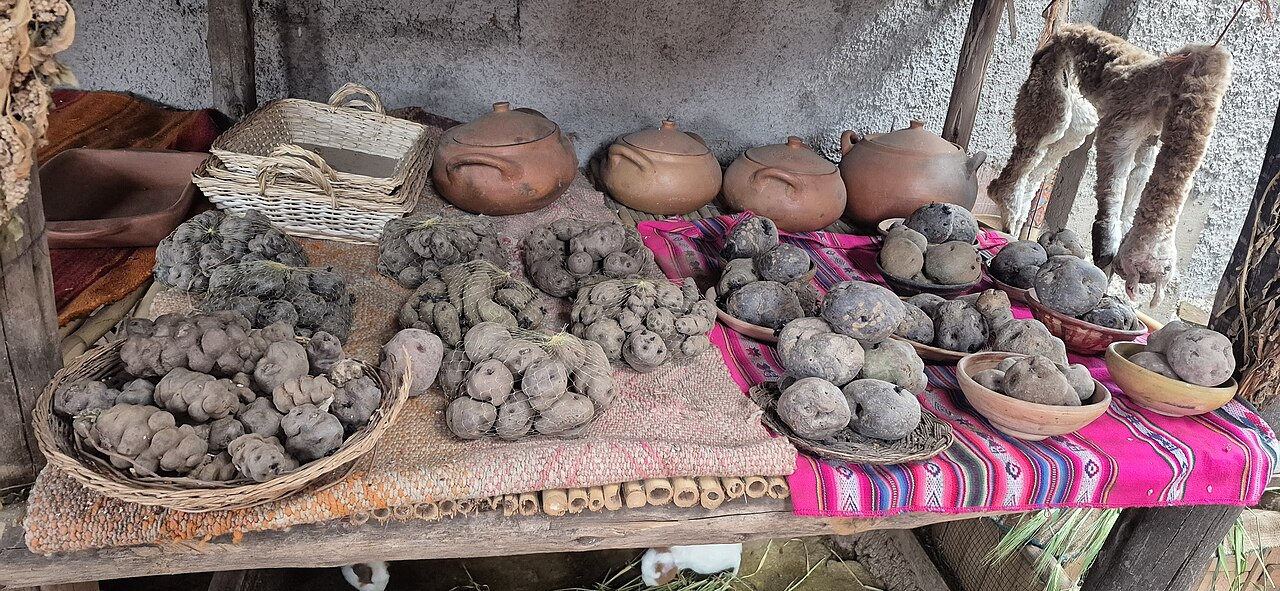
Most supermarkets offer a handful of potato types, but in Peru the choice runs into the thousands. The Food and Agriculture Organization of the United Nations (FAO) says the country is home to more than 3,000 varieties of potato. That diversity reflects thousands of years of farming in the Andes, the region where the potato was first domesticated.
Where the potato began
According to the FAO, the story of the potato began about 8,000 years ago near Lake Titicaca, high in the Andes on the border between Bolivia and Peru. Hunter-gatherers there started domesticating wild potato plants, which grow naturally across the region. Genetic research has supported this picture: a study led by the plant scientist David Spooner, published in the Proceedings of the National Academy of Sciences in 2005, pointed to a single origin for the cultivated potato in a broad area of southern Peru.
Over the following millennia Andean farmers selected and grew potatoes suited to very different conditions, from warm valleys to cold slopes thousands of metres above sea level. Fields often contained many varieties at once, which helped protect harvests against frost, drought and disease. The FAO estimates that around 5,000 potato varieties are still grown across the Andes as a whole, with Peru accounting for a large share.
Colours, shapes and names
Many of Peru’s native varieties look nothing like the uniform tubers sold in most shops, varying widely in colour, shape and texture. The FAO links Peru’s wealth of varieties to the country’s rich agricultural biodiversity and to farming knowledge handed down over many generations. Much of this diversity is kept alive by small farming families in mountain communities, who save and replant their own seed potatoes. Peru’s state news agency Andina has reported that more than 700,000 families in the country make their living from growing potatoes.
Chuño: preserving the harvest
Fresh potatoes do not keep for long, so Andean peoples developed ways to store them. One of the best known is chuño, a freeze-dried potato product that makes use of the cold conditions of the high Andes. Drying the potatoes turned a perishable harvest into food that could be stored and carried. The FAO notes that the Incas used it to feed officials, soldiers and workers, and kept it as a reserve against crop failures.
A seed bank in Lima
Peru is also home to the International Potato Center, known by its Spanish initials CIP, which was founded in 1971 and has its headquarters in Lima. The centre runs one of the world’s most important genebanks for potatoes. Its cultivated potato collection began with about 1,800 samples donated by Peru’s national potato programme, and it now holds 4,670 traditional varieties, known as landraces, from 18 countries, most of them in the Andes.
The collection was first kept in fields at a research station in Huancayo, in Peru’s central highlands. Today the whole clonal collection is maintained as plants growing in sterile test tubes, a method CIP has used for more than 30 years, and more than 450 samples are added each year to long-term storage at extremely low temperatures. These backups mean that if a variety is lost in farmers’ fields, it can still be recovered and returned to the communities that once grew it.
Key points
- The FAO says Peru is home to more than 3,000 varieties of potato.
- According to the FAO, the potato was domesticated about 8,000 years ago near Lake Titicaca, on the border between Peru and Bolivia.
- Andean peoples made chuño, a freeze-dried potato product that the Incas stored as food for soldiers, officials and times of crop failure.
- The International Potato Center in Lima, founded in 1971, maintains a genebank holding thousands of traditional potato varieties from 18 countries.
Sources
- Peru: native potatoes, FAO Regional Office for Latin America and the Caribbean
- New light on a hidden treasure: International Year of the Potato 2008, Food and Agriculture Organization of the United Nations
- Cultivated Potato Germplasm Collection, International Potato Center (CIP)
Image: Cathetovar, CC BY 4.0, via Wikimedia Commons