
3 min read
A July 2008 survey of the lower Congo River recorded depths of more than 200 metres, and Guinness World Records lists it as the deepest river on Earth.
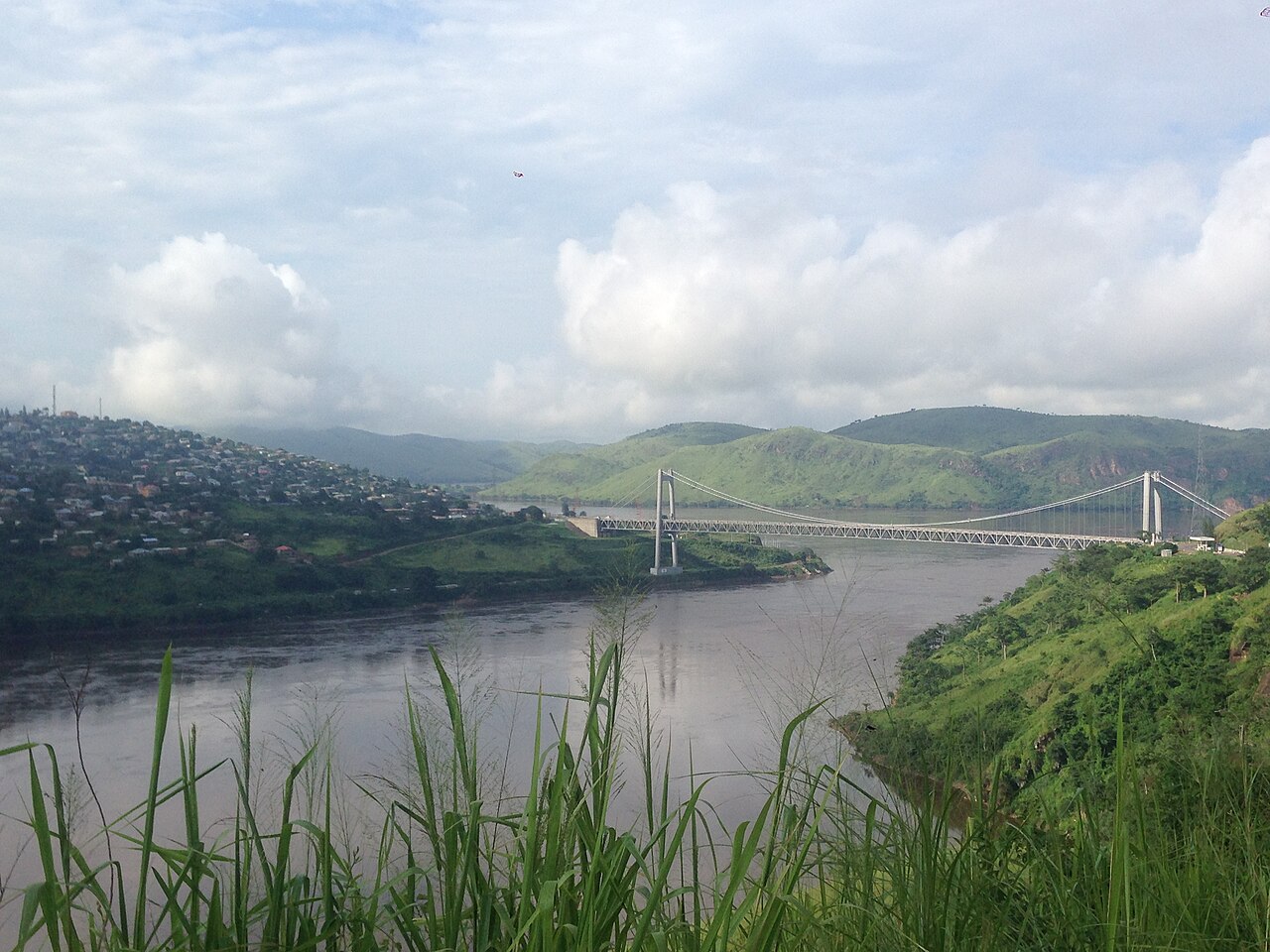
The Congo is famous for its size, but it also holds a less obvious record. In its lower course, between Malebo Pool and the Atlantic, the riverbed drops to at least 220 metres below the surface. No other river on Earth is known to reach that depth.
How the depth was measured
Nobody had directly measured the flow of the lower Congo until July 2008. That month a team from the US Geological Survey and the American Museum of Natural History worked on the stretch of river below Malebo Pool, in the Democratic Republic of Congo. They used acoustic Doppler current profilers, which bounce sound off moving particles to measure water speed, along with echo sounders and differential GPS to map the bed precisely.
The results, written up by Kevin Oberg and colleagues in 2009, showed a maximum depth of more than 200 metres. Guinness World Records, drawing on the same survey, lists the Congo’s maximum depth as at least 220 metres. To picture this, a 60 storey tower could stand on the bottom and still be covered by water. The team also recorded water moving at more than 4 metres per second and measured a discharge of 35,800 cubic metres per second near the town of Luozi.
Why the river is so deep
The lower Congo does not run over soft sediment like many large rivers near the sea. Instead it is tightly controlled by bedrock. The USGS researchers found that the rock shaped the flow strongly even in places with no visible rapids or waterfalls, and cross sections of the channel revealed dramatic changes in the shape of the bed. A huge volume of water squeezed through narrow rocky gorges has carved deep pools and trenches into the channel floor.
A natural laboratory for fish evolution
The survey was not carried out simply to set a record. It was designed to help biologists understand why fish species are distributed the way they are in this part of the river. Melanie Stiassny, a curator of ichthyology at the American Museum of Natural History, studies fish in the rapids of the lower Congo, the final 322 kilometres or so before the river meets the ocean. More than 300 fish species are found in this stretch alone.
The rapids, powerful currents and underwater drops act much like mountain ranges do on land. They cut fish populations off from one another, and over long periods those isolated groups have evolved into separate species. The fast currents can also create jets of water that surge from the riverbed towards the surface.
The mystery of the blind cichlid
One of the strangest residents is a small, pale and blind cichlid known as Lamprologus lethops. It looks like a fish that lives in caves, yet the lower Congo has no caves. Its lack of eyesight and colour pointed researchers towards a life in the deep, dark water near the riverbed.
For years these fish were only ever found dead or dying at the surface. Stiassny noticed gas bubbles under the skin and over the gills of one barely living specimen, a classic sign of the bends. Her team suggested that a fish caught in one of the upwelling jets is carried up from the deep far too quickly, so the falling pressure causes gas to come out of solution in its body. She presented the findings to the American Geophysical Union in December 2019. The record depth of the Congo is therefore more than a statistic. It is part of the reason this river has produced such an unusual community of fish.
Key points
- Guinness World Records lists the Congo as the deepest river, with a maximum depth of at least 220 metres in its lower course.
- The depths were measured in July 2008 by the US Geological Survey and the American Museum of Natural History using echo sounders and acoustic Doppler current profilers.
- The same survey recorded water speeds above 4 metres per second and a discharge of 35,800 cubic metres per second near Luozi.
- Rapids and deep channels split fish populations apart, helping explain why more than 300 fish species live in the lower Congo alone.
Sources
- Discharge and other hydraulic measurements for characterizing the hydraulics of Lower Congo River, US Geological Survey
- Deepest river, Guinness World Records
- Dying fish revealed Congo is world's deepest river, Live Science
Image: Χρίστος Ιμμανοελ, CC BY-SA 4.0, via Wikimedia Commons