
3 min read
The Bajau sea nomads of Indonesia have spleens about 50% larger than their land-based Saluan neighbours, an inherited trait linked to a variant of the PDE10A gene that may help them dive.
For generations the Bajau people of Southeast Asia have made their living from the sea, diving for fish and shellfish with nothing more than goggles and a weight belt. A study published in 2018 found that their bodies appear to have adapted to this way of life. On average, the Bajau have spleens about half as large again as those of their land-dwelling neighbours.
Who the Bajau are
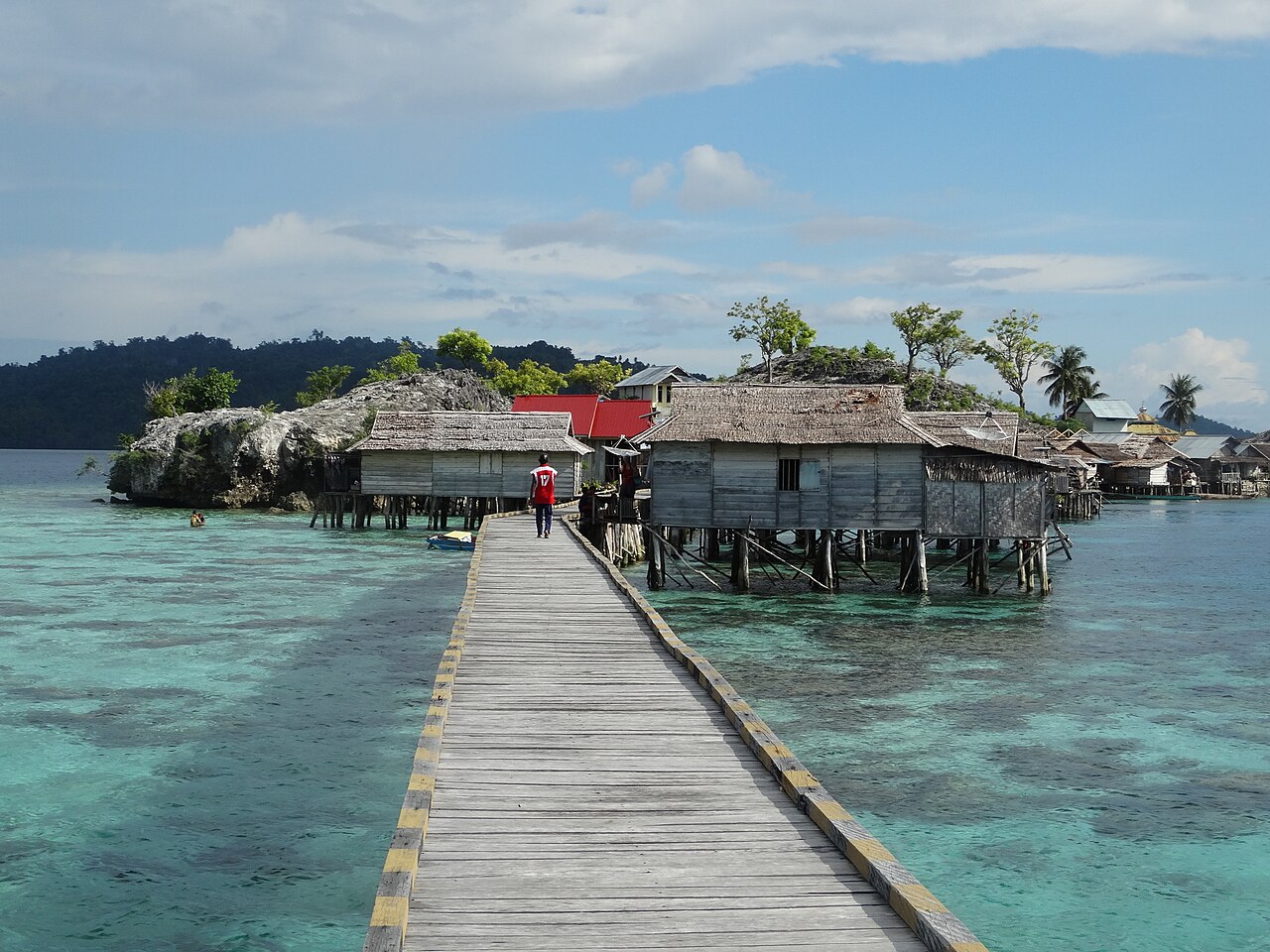
Often called sea nomads, the Bajau have traditionally lived on houseboats in the waters around and between Indonesia, Malaysia and the Philippines, coming to land only occasionally. Diving is part of everyday work. Some Bajau spend as much as 60% of their working day underwater, and divers have been observed going deeper than 70 metres on a single breath. Shallower dives of around 10 metres to collect shellfish can go on for hours.
Measuring spleens in the village
Geneticist Melissa Ilardo, then at the University of Copenhagen, travelled to the Bajau village of Jaya Bakti in Indonesia with a portable ultrasound machine. She scanned the spleens of 43 Bajau and 33 Saluan, a genetically similar farming people who live nearby but do not dive. She also collected saliva for genetic testing.
The results, published in the journal Cell, showed that the median Bajau spleen was about 50% larger than the Saluan one. Crucially, Bajau who did not dive also had enlarged spleens. Among the Bajau, divers’ spleens were only about 10% bigger than non-divers’. That suggested the difference was mostly inherited rather than the product of years of training.
Why the spleen matters
When mammals hold their breath and plunge into water, they trigger a set of responses known as the dive reflex. The heart slows, blood vessels in the limbs tighten to divert blood to vital organs, and the spleen contracts. The spleen acts as a store of oxygen-rich red blood cells, so squeezing it releases an extra supply into the circulation. A larger spleen means a bigger reserve to draw on during a long dive. Finding an inherited difference in this organ in a human population was a striking result.
A gene behind the difference
By comparing the genomes of the Bajau with those of the Saluan and Han Chinese, the research team, which included senior author Rasmus Nielsen of the University of California, Berkeley, and colleagues at Radboud university medical center in the Netherlands, searched for signs of natural selection. One of the strongest signals was in a gene called PDE10A. A particular version of this gene was associated with larger spleen size, even after the researchers accounted for age, sex and height.
PDE10A is thought to influence levels of the thyroid hormone T4, and studies in mice have linked that hormone to spleen size. Just under half of the Bajau carry the variant linked to bigger spleens, compared with 6% of the Saluan and 3% of Han Chinese. The researchers suggested that thousands of years of diving may have favoured people who carried it.
The study was one of the first to show a genetic adaptation to diving in humans. The researchers also hope it will shed light on how different people respond to a lack of oxygen, knowledge that matters in medical settings such as surgery.
Key points
- A 2018 study in the journal Cell found the median Bajau spleen was about 50% larger than that of the neighbouring Saluan people.
- Bajau who did not dive also had large spleens, which pointed to a genetic cause rather than training.
- A variant of the PDE10A gene, thought to influence thyroid hormone levels, was linked to the larger spleen size.
- Bajau divers have been observed reaching depths of more than 70 metres with only a weight belt and goggles.
Sources
- Human "sea nomads" may have evolved to be the world's elite divers, Scientific American
- Longer dives because of larger spleen, Radboud university medical center
- Indigenous Bajau People Evolved Larger Spleens for Free-Diving, Sci.News
Image: Benoît Vicart, CC0, via Wikimedia Commons