
2 min read
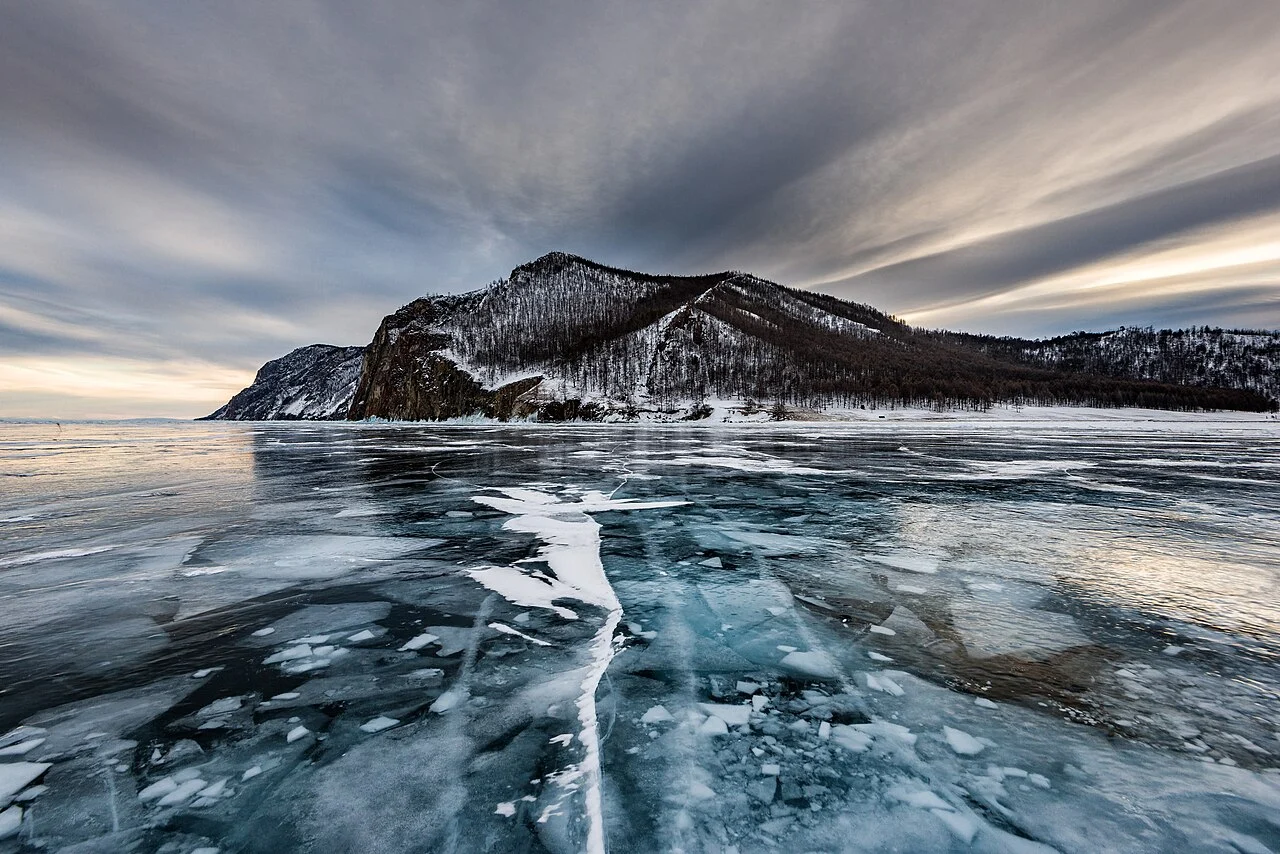
Lake Baikal in Siberia is the world's oldest and deepest lake, about 25 million years old and roughly 1,700 metres deep, and it contains around 20 per cent of the world's unfrozen fresh water.
Most lakes are young. They form when glaciers retreat or rivers shift, and over thousands of years they fill with sediment and disappear. Lake Baikal, in south-east Siberia, is different. It has existed for around 25 million years, and in that time it has become the deepest and most voluminous body of fresh water on the planet.
Old, deep and full
UNESCO, which added Baikal to its World Heritage List in 1996, describes it as both the oldest and the deepest lake in the world, at about 1,700 metres deep. The lake covers about 3.15 million hectares, and because it is so deep it holds an enormous volume of water: around 20 per cent of the world’s total unfrozen freshwater reserve.
That phrase matters. Most of Earth’s fresh water is locked away as ice in glaciers and polar ice sheets. Of the fresh water that is liquid and sitting at the surface, roughly one part in five is in this single lake.
Why it is so deep
Baikal lies in a rift, a place where the Earth’s crust is slowly being pulled apart. Rather than filling up and vanishing as most lakes do, the basin has kept deepening over millions of years. That long life is what separates Baikal from lakes formed by the last ice age, which are typically only thousands of years old.
The Galapagos of Russia
Age and isolation have also made Baikal a remarkable place for life. UNESCO says they have produced one of the world’s richest and most unusual freshwater faunas, of exceptional value to evolutionary science, which is why the lake is sometimes called the Galapagos of Russia. Many of its species live nowhere else, including the Baikal seal, one of the very few seals that live only in fresh water.
A lake under watch
When the World Heritage Committee inscribed the site, it also recorded concerns about pollution and other threats to its integrity. Protecting Baikal means protecting a record of evolution millions of years in the making, as well as a significant share of the planet’s liquid fresh water.
Key points
- UNESCO lists Lake Baikal as the oldest lake in the world, at about 25 million years.
- It is also the deepest, at roughly 1,700 metres.
- It holds about 20 per cent of the world's unfrozen freshwater reserve.
- Its age and isolation have produced one of the richest and most unusual freshwater faunas, earning it the nickname the Galapagos of Russia.
- Lake Baikal was inscribed as a UNESCO World Heritage Site in 1996.
Sources
- Lake Baikal, UNESCO World Heritage Centre
Image: Sergey Pesterev, CC BY-SA 4.0, via Wikimedia Commons