
3 min read
In 1841, Edmond Albius, a 12-year-old enslaved boy on Réunion, discovered how to hand-pollinate vanilla flowers, allowing the crop to be grown commercially outside its native Mexico.
Vanilla is one of the most familiar flavours in the world, yet for centuries almost all of it came from one region of Mexico. Plants taken elsewhere grew well but rarely produced a single pod. The person who changed that was a 12-year-old enslaved boy on the island of Réunion, in 1841.
A vine that would not fruit
Vanilla comes from the seed pods of a climbing orchid native to Mexico and Central America. In its homeland, the flowers were pollinated by local insects, including a small bee. When European colonists carried vanilla vines to other tropical regions, those pollinators did not come with them, and the plants simply flowered and failed.
On Réunion, an island in the Indian Ocean then known as Bourbon, a plantation owner named Ferréol Bellier-Beaumont had received vanilla vines from the government in Paris. According to National Geographic, only one plant survived, and it grew for 22 years without ever setting fruit.
The boy who solved it
Edmond, born on 9 August 1829 in Sainte-Suzanne, was enslaved on Bellier-Beaumont’s estate. His owner had taught him about plants and horticulture. In 1841, at the age of 12, Edmond worked out how to pollinate the vanilla flower by hand.
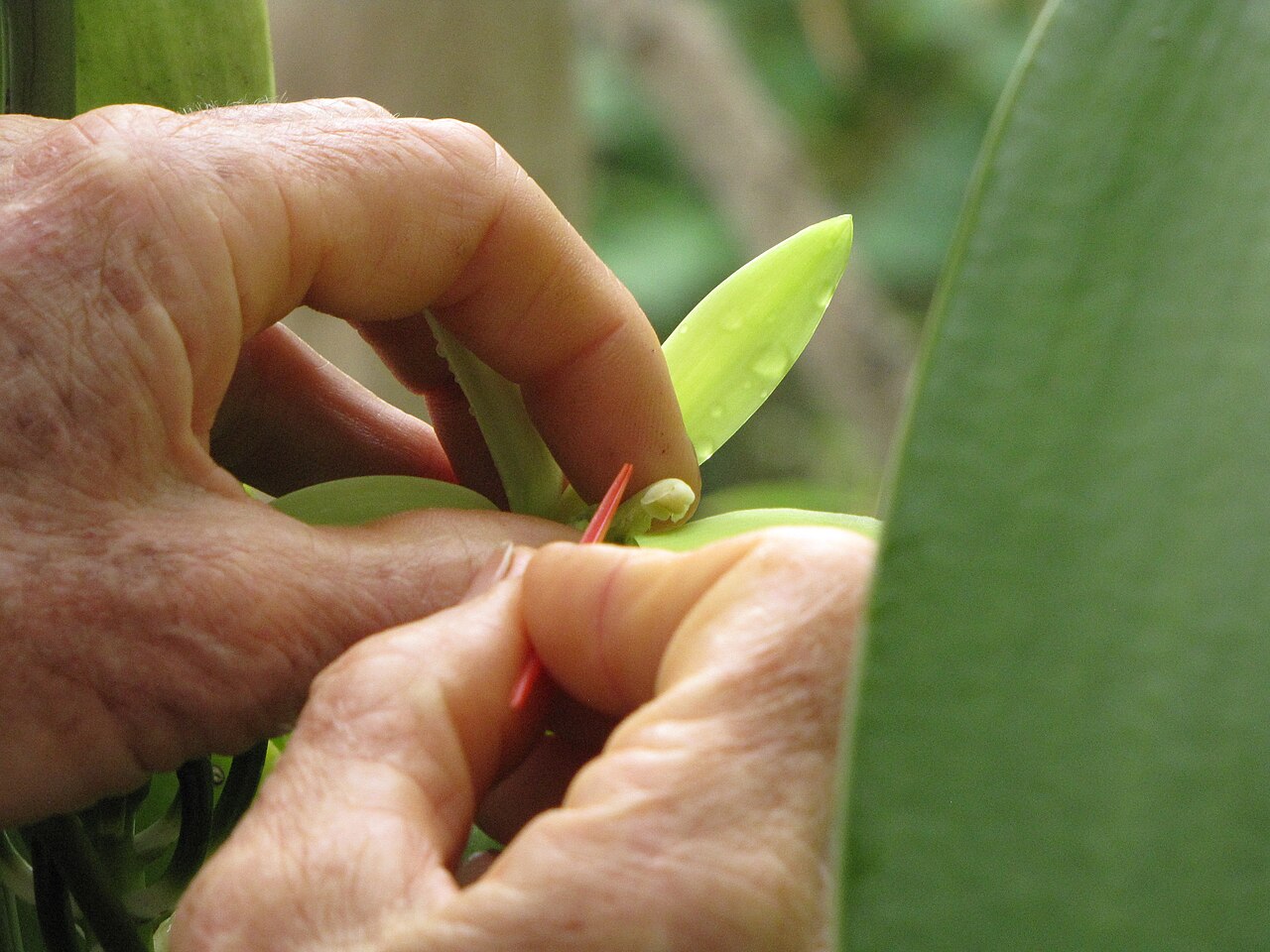
The challenge lies in the flower’s structure. Its pollen and its stigma are separated by a small flap called the rostellum, which normally prevents self-pollination. Edmond used a little tool to lift the flap, held it out of the way and pressed the pollen onto the stigma. Bellier-Beaumont found pods developing on the old vine and later wrote that Edmond was the one who had discovered how to fertilise the plant manually.
The method was quick and easy to teach, and Edmond showed it to workers on other plantations. A botanist in Paris, Jean Michel Claude Richard, later claimed that he had developed the technique and taught it on Réunion in 1838. Bellier-Beaumont publicly rejected that claim, and historians now credit Edmond.
From one vine to an industry
The effect on production was dramatic. National Geographic reports that Réunion exported no vanilla in 1841. By 1848 it was shipping about 50 kilograms to France, by 1858 two tonnes, by 1867 twenty tonnes, and by 1898 around 200 tonnes. By then the island had overtaken Mexico as the world’s largest producer.
Part of the reason vanilla has stayed expensive is that pollination by hand is slow. Each flower has to be treated individually, and the pods then need months of curing before they develop their aroma. Edmond’s discovery made commercial vanilla possible outside Mexico, but it did not make it effortless.
A life without reward
Edmond was freed in 1848, when France abolished slavery in its colonies. He took the surname Albius, from the Latin word for white, a reference to the vanilla flower. He received no share of the wealth his technique created. He worked in low-paid jobs, spent time in prison and died in poverty in 1880, at the age of 51, in Sainte-Suzanne.
Recognition came slowly. Réunion now honours him with a plaque, a statue and a school that bears his name, and the island’s coat of arms features a vanilla vine. Every time vanilla is grown outside its native range, it relies on a technique first demonstrated by a child whose name was nearly lost.
Key points
- Vanilla plants taken outside Mexico flowered but rarely produced pods.
- In 1841, 12-year-old Edmond lifted the flower's rostellum and pressed pollen onto the stigma.
- Réunion's vanilla exports grew from nothing in 1841 to about 200 tonnes by 1898.
- Edmond Albius was freed in 1848 but died in poverty in 1880.
Sources
- The Little Boy Who Should've Vanished, but Didn't, National Geographic
- Edmond Albius, Europeana
Image: Forest and Kim Starr, CC BY 3.0 US, via Wikimedia Commons