
3 min read
A 2021 study in Frontiers in Communication found that the Yoruba dùndún talking drum closely reproduces the timing, pitch and intensity patterns of spoken Yoruba, a language with three tones.
The talking drum of West Africa is often described in poetic terms, as if the idea of a drum that speaks were a figure of speech. Acoustic analysis tells a more literal story. A 2021 study found that the Yorùbá dùndún closely reproduces the timing, pitch movement and loudness patterns of spoken Yorùbá.
A drum built for a tonal language
Yorùbá, spoken widely in south-western Nigeria and neighbouring countries, is a tonal language. It uses three distinct tones, so the same string of consonants and vowels can mean different things depending on whether each syllable is said high, mid or low. Pitch carries meaning in a way that it does not in languages such as English.
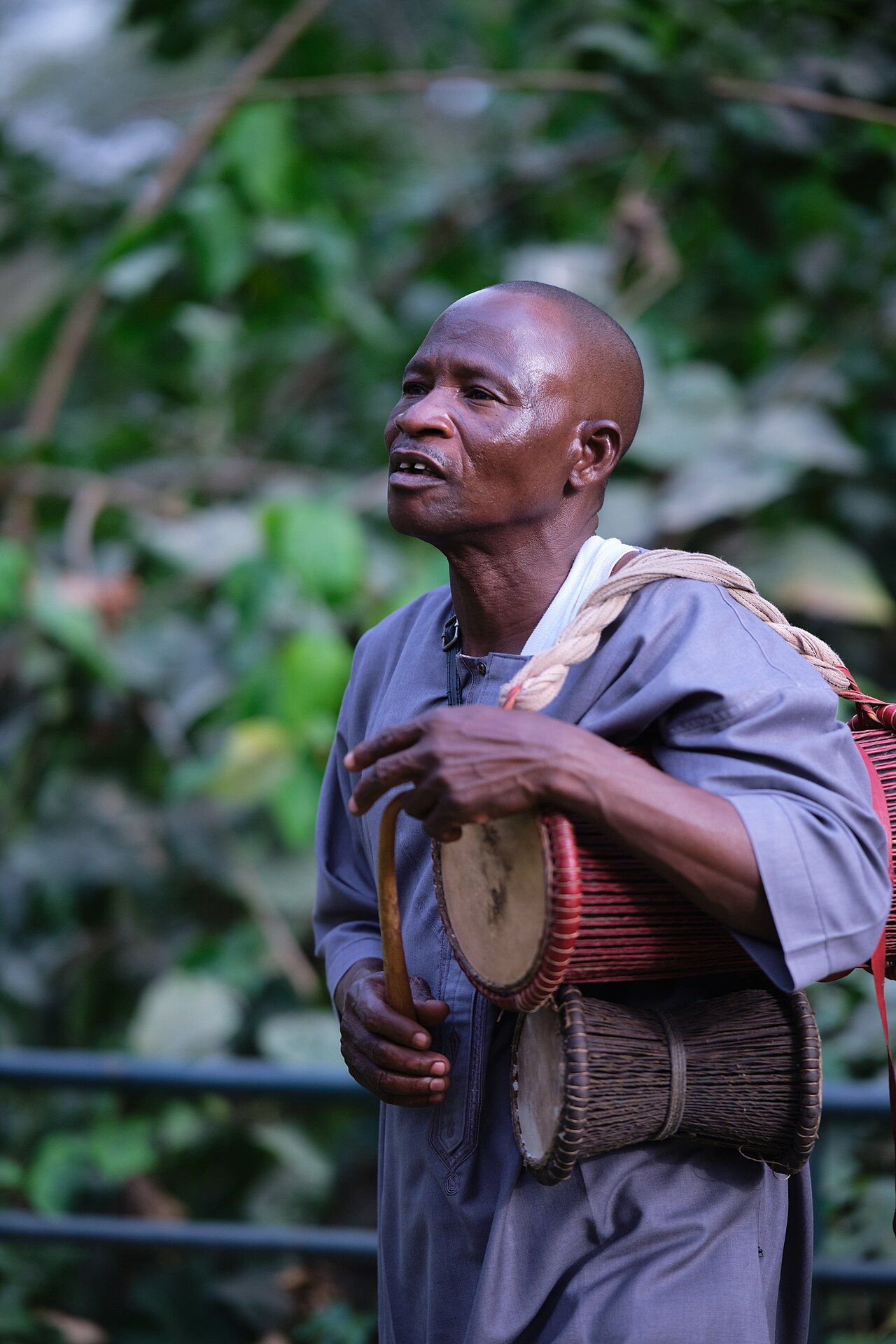
The dùndún is designed to exploit this. It is an hourglass-shaped drum with a skin at each end, and the two skins are connected by leather cords that run along its body. The player holds the drum under one arm and squeezes the cords to tighten the skins, which raises the pitch, then relaxes them to let it fall. The other hand strikes the drum with a curved stick. Britannica classes the dùndún among pressure drums for exactly this reason.
What the researchers measured
The study, published in Frontiers in Communication and led by musicologist Cecilia Durojaye, then affiliated with Arizona State University, compared 30 spoken and sung Yorùbá recordings with matching performances by professional dùndún drummers in Nigeria. The team analysed timing, frequency and intensity across speech, song and drumming.
The drum’s patterns tracked the fine structure of speech closely when it was being used to talk. The match weakened when the same drum was used in more musical ways, such as accompanying song. The authors described four modes along this spectrum: rhythm, singing, a performative style of drum talking and a direct style of drum talking. The study was among the first to show such a strong acoustic correlation between a talking drum and the spoken language it imitates.
A drum with a message
An earlier paper by Durojaye and colleagues, published in Frontiers in Psychology in May 2021, described the dùndún as a speech surrogate. In that role it has been used for announcements, warnings, prayers, jokes, proverbs and poetry, and to carry oral history from one generation to the next. When the drum is talking, it is typically played without singing or other vocals, so the message comes from the drum alone.
Talking drums are not unique to the Yorùbá. Britannica notes that related traditions exist in East and West Africa, Melanesia and Southeast Asia, and that some drum messages could carry up to 32 kilometres, relayed onward by other drummers. Among the Asante of Ghana, the atumpan and fontomfrom drums are especially well known.
Why it matters
For listeners who know Yorùbá, none of this is news. Generations of drummers and audiences have understood the dùndún as speech carried by sound. What the research adds is measurable evidence that the resemblance runs deeper than impression, down to the timing and intensity of individual syllables.
That matters for science as well as heritage. Durojaye has said the talking drum has a foot in both language and music, which makes it a useful window into how closely the two are related in the human mind. Many questions remain open, including exactly how drummers encode syllables and grammar. The answers are likely to come from studying a tradition that West African musicians have practised for centuries.
Key points
- Yoruba is a tonal language with three distinct tones.
- Players squeeze the dùndún's cords to raise or lower its pitch.
- A 2021 study compared 30 Yoruba speech and song recordings with drum performances.
- The match to speech was strongest when the drum was used to talk, not to make music.
Sources
- How Does the West African Talking Drum Accurately Mimic Human Speech?, Smithsonian Magazine
- Talking drum shown to accurately mimic speech patterns of West African language, Frontiers
- Talking drum, Encyclopaedia Britannica
Image: Tijani Taofeek Bamidele, CC BY-SA 4.0, via Wikimedia Commons