
3 min read
An octopus has three hearts: two pump blood through its gills, and a third sends that oxygen-rich blood around the body. Its blood is blue because it carries oxygen with a copper-based protein called hemocyanin.
Humans manage with one heart and red blood. An octopus runs on three hearts, and its blood is blue. Both features belong to the same solution: a way of moving oxygen around a soft, active body that often lives in cold, oxygen-poor water.
Three hearts, two jobs
The Smithsonian’s ocean scientists describe the layout simply. Two branchial hearts sit near the gills. They take blood that has already delivered its oxygen and push it through the gills, where it drops carbon dioxide and picks up fresh oxygen. A third, the systemic heart, then raises the pressure of that refreshed blood and pumps it through the rest of the body to power the muscles and organs.
The National Aquarium in Baltimore compares this to our own anatomy. The branchial hearts do the work of the right side of a human heart, which sends blood to the lungs, while the systemic heart does the job of the left side, which supplies the body. Like us, octopuses have a closed circulatory system, so their blood travels inside vessels rather than washing loosely through the body.
Why the blood is blue
Human blood is red because oxygen rides on haemoglobin, a protein built around iron and packed into red blood cells. Octopuses, along with squid, cuttlefish and nautiluses, use a different protein called hemocyanin, which is built around copper. When hemocyanin carries oxygen it gives the blood a blue tint.
Hemocyanin also behaves differently. It is a large molecule that floats freely in the blood plasma instead of sitting inside cells, and it binds oxygen less strongly than haemoglobin does. Having two extra hearts dedicated to pushing blood through the gills is one way octopuses make up for that weaker grip.
A system built for the cold
The trade-off has advantages. Research on an Antarctic octopus, cited by the Smithsonian, suggests the hemocyanin system helps keep oxygen moving efficiently across a wide range of temperatures and oxygen levels, and it works especially well in cold water. That suits animals that live everywhere from rock pools to the deep sea.
There is a cost when octopuses move fast. The systemic heart stops beating while an octopus swims by jet propulsion, which is tiring, so many octopuses prefer to crawl along the seabed with their arms.
A weakness in warming seas
Hemocyanin has one notable vulnerability: it holds on to oxygen less well as water becomes more acidic. The Smithsonian and other sources note that this could make life harder for octopuses as the oceans absorb more carbon dioxide and slowly become warmer and more acidic. The three hearts that serve these animals so well may not be enough if the chemistry of the water keeps changing.
Key points
- Two branchial hearts push oxygen-poor blood through the gills, and one systemic heart pumps oxygenated blood to the organs and muscles.
- Octopus blood uses copper-based hemocyanin instead of the iron-based haemoglobin in human blood, which is why it looks blue.
- Hemocyanin binds oxygen less strongly than haemoglobin, and the extra hearts help make up for that.
- The systemic heart stops beating while an octopus swims, which is one reason octopuses usually prefer to crawl.
- Hemocyanin works well in cold water but holds oxygen less well as water becomes more acidic.
Sources
- Octopuses, Squids, and Relatives, Smithsonian Ocean
- Otherworldly Octopuses, National Aquarium
- Eight Strange and Wonderful Facts About Octopuses, Shedd Aquarium
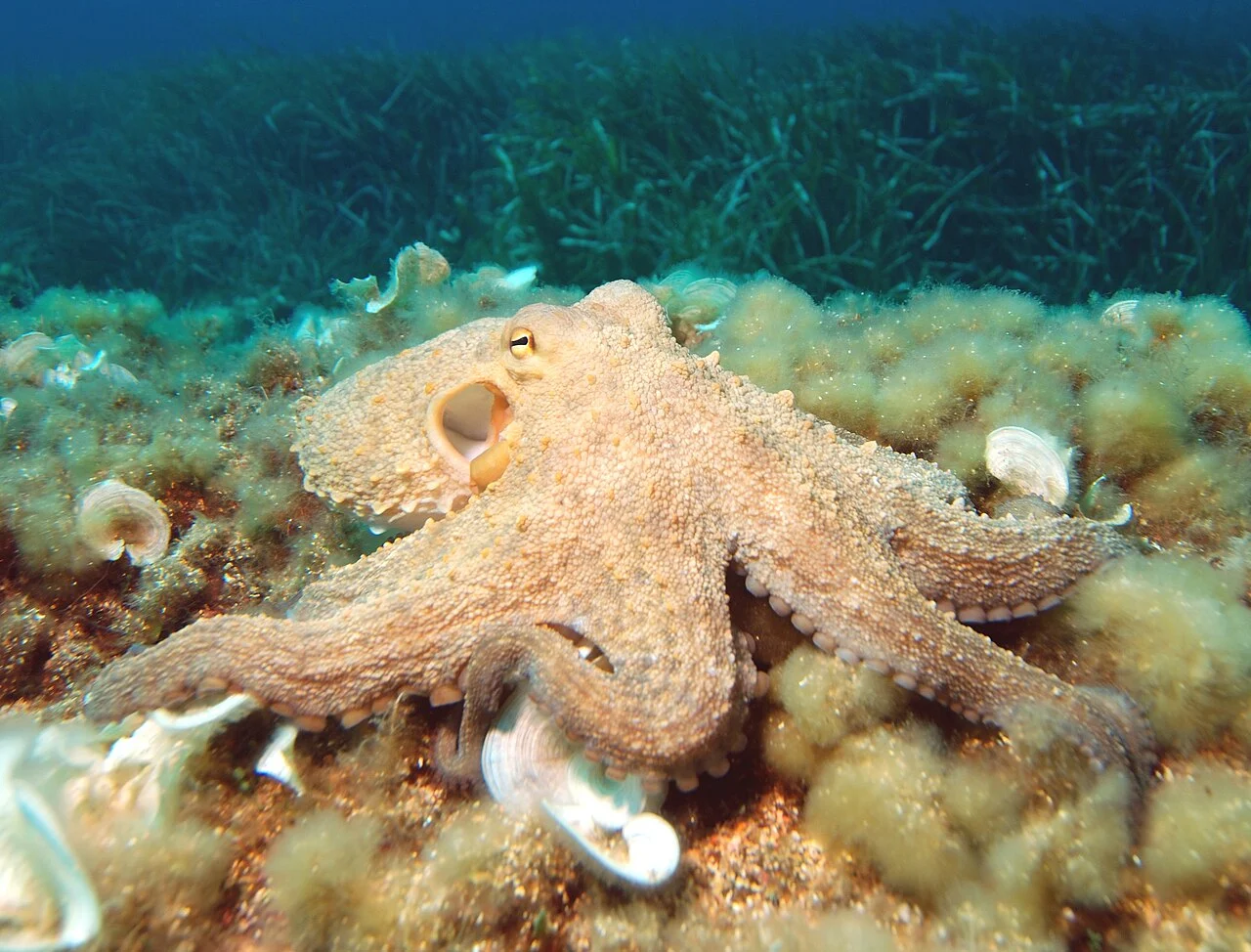
Image: albert kok, CC BY-SA 3.0, via Wikimedia Commons